Ground Up Evaluation of the West Daly Peace Project
In early 2025, the Ground Up team at Charles Darwin University’s (CDU’s) Northern Institute were commissioned by the Community Justice Centre (CJC) of the Northern Territory’s (NT’s) Attorney General’s Department to evaluate the West Daly Peace Project.
The West Daly Peace Project (2024–2026) is funded by the National Indigenous Australians Agency (NIAA) and the NT Attorney General’s Department. It aims to enhance local mediation and peacekeeping across the communities of Nauiyu, Peppimenarti, Nganmarriyanga, Wadeye, and their connected homeland areas.
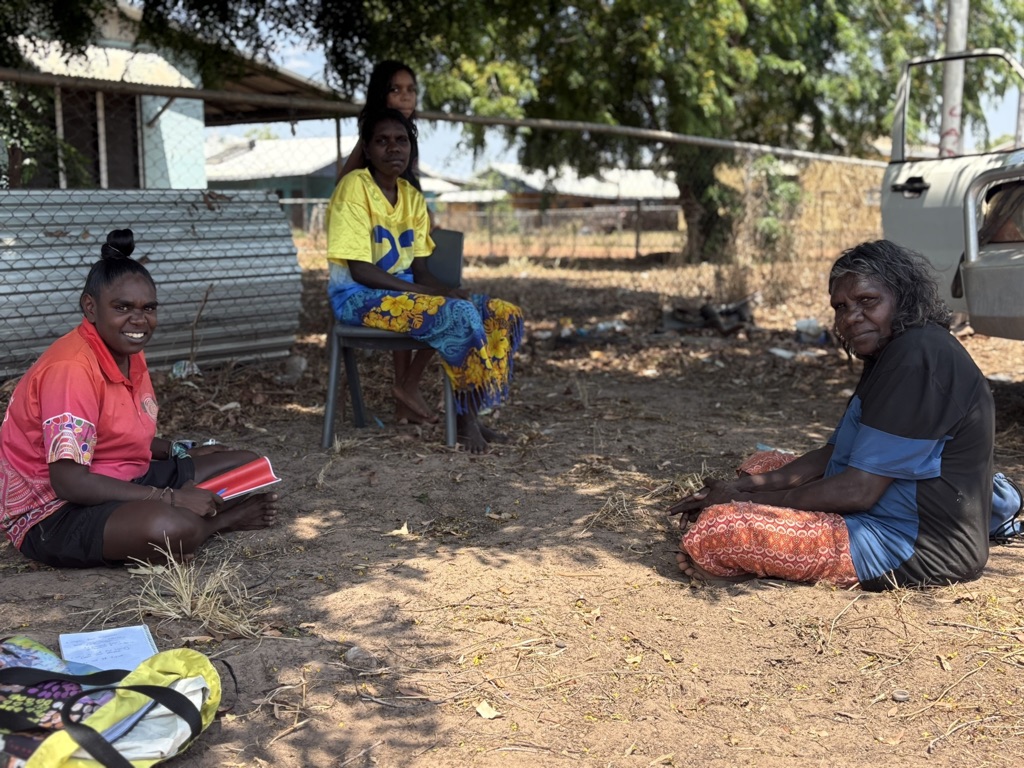
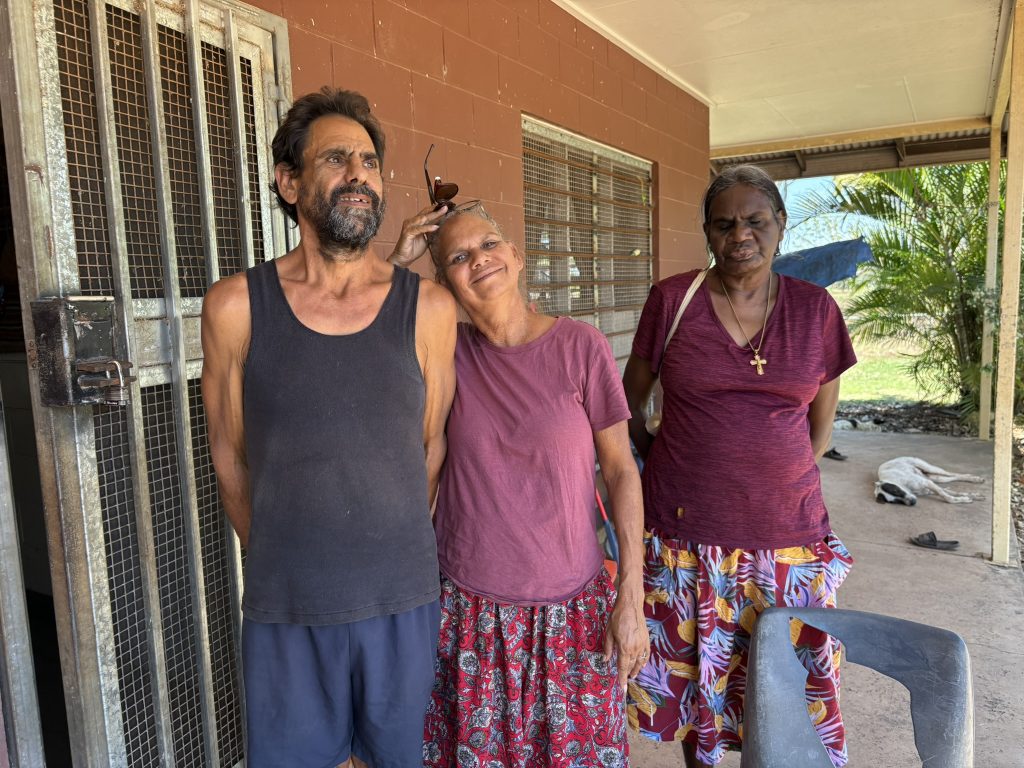
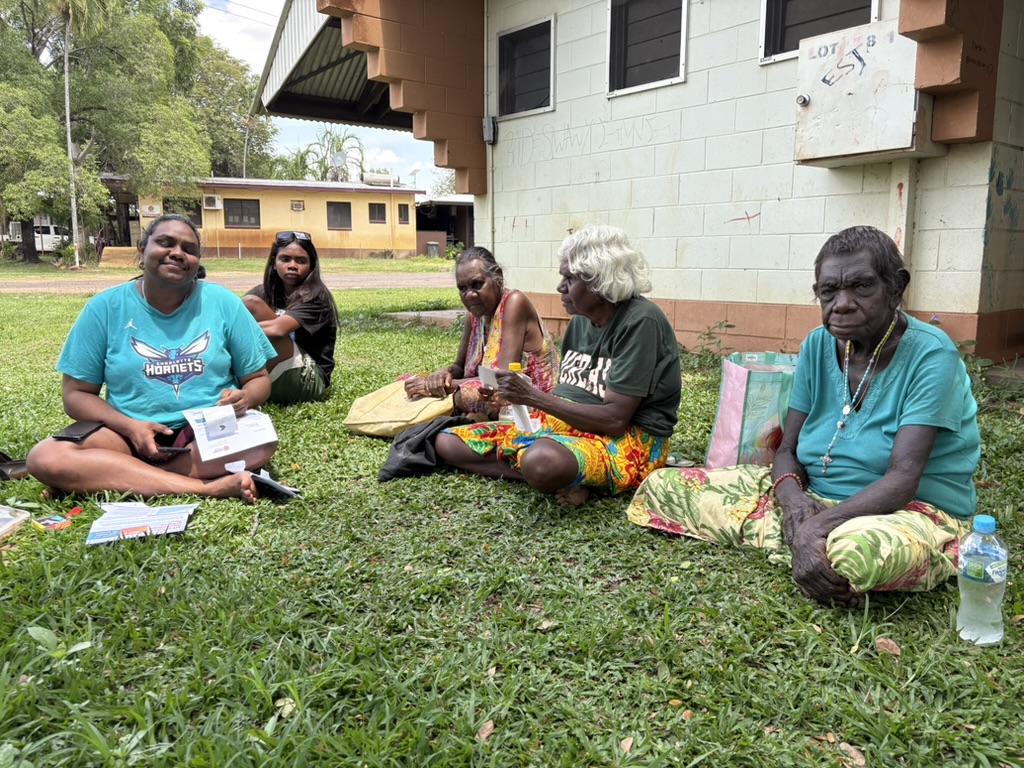
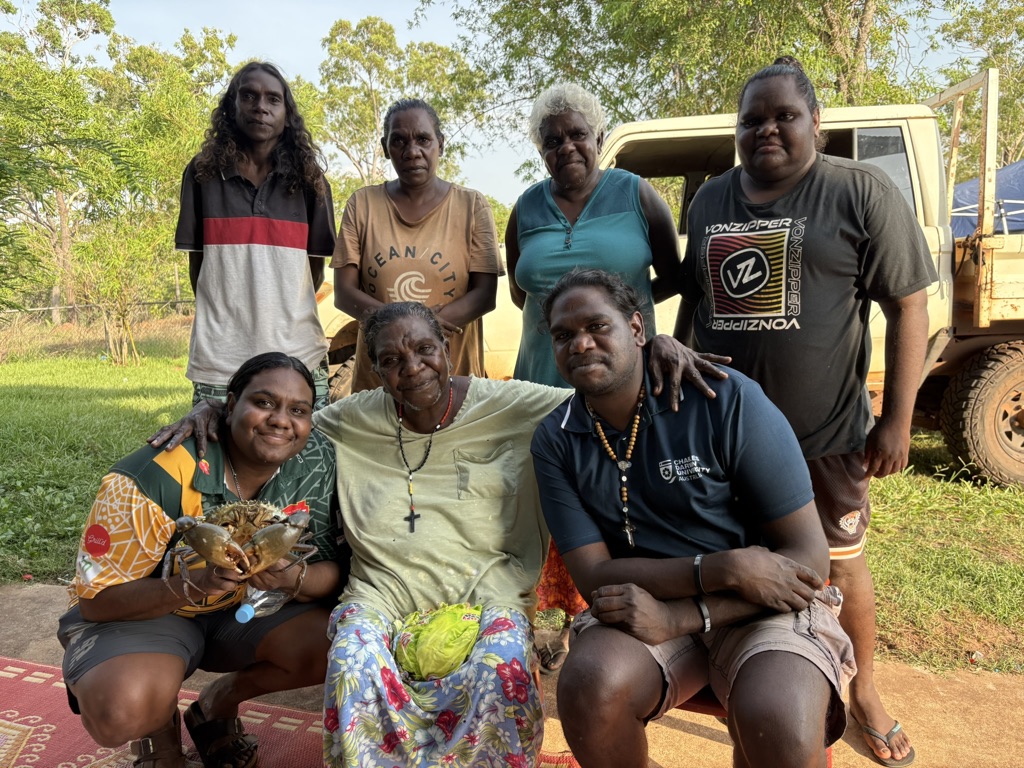
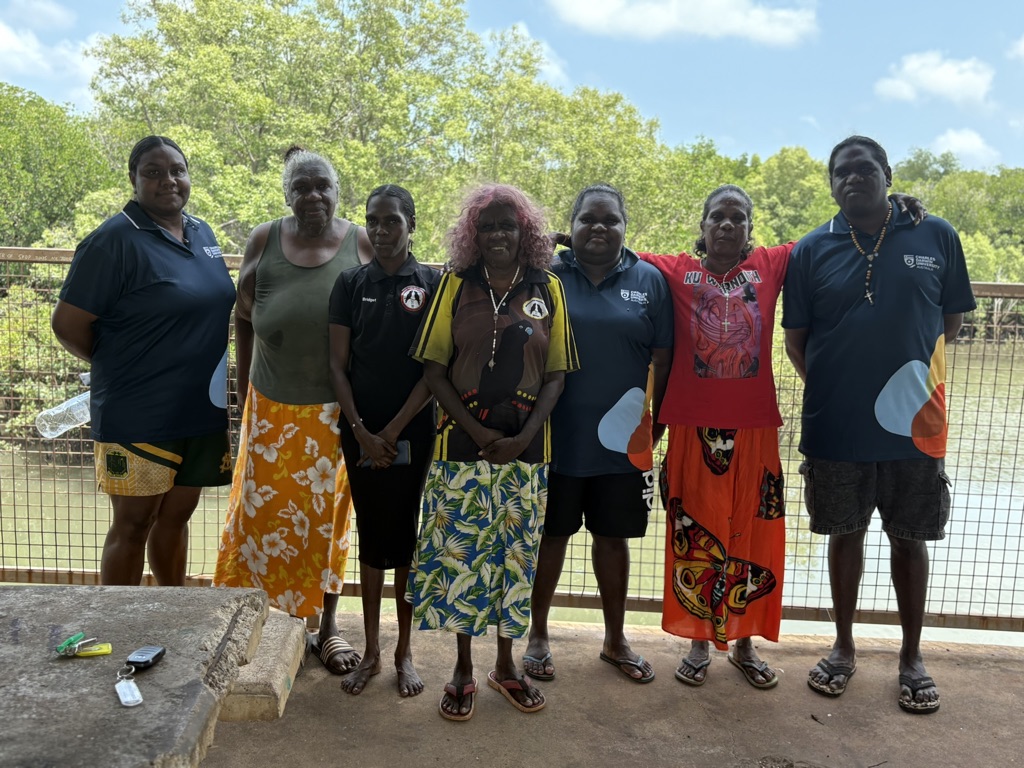
The local researchers who guided this project were critical to all aspects of the work, including conceptualisation, design, on-ground facilitation and interpretation. Latisha Marranytya, Janine Cooper and Troy Mardigan guided the research in Nauiyu and Wadeye; Annunciata Wilson guided work in Peppimenarti; and Jack Wodidj and Melanie Cook were research leaders in Nganmarriyanga.
Ground Up researcher Michaela Spencer worked across all four communities, collaborating with the research teams. She also worked with the local researchers and fellow Ground Up member Michael Christie around interpreting and collating findings.
Key findings:
- Within the West Daly, there have always been strong Aboriginal processes for nurturing peace and dealing with conflict as it arises, including through the four ceremony groups — Wangka, Tjarnpa, Lirrga and Wulthirri.
- Elders remain confident in these processes and appreciate grounded local support that aligns with local arrangements.
- Disputes were not seen as stand-alone events, but as emerging in relation to issues of local governance — including pre-existing tensions within Aboriginal governance (invested in Aboriginal ‘people-places’) and government governance (concerned with ‘the community’).
- Peace is preserved when networks of kin on country are in good productive relation. Networks of agencies contribute positively to peace to the extent that they, too, are in positive relation with each other and with kin networks.
- Focusing on the speedy resolution of disputes was not always seen as the most productive path to peace; resolutions often take time and involve working through issues not visible to government agencies.